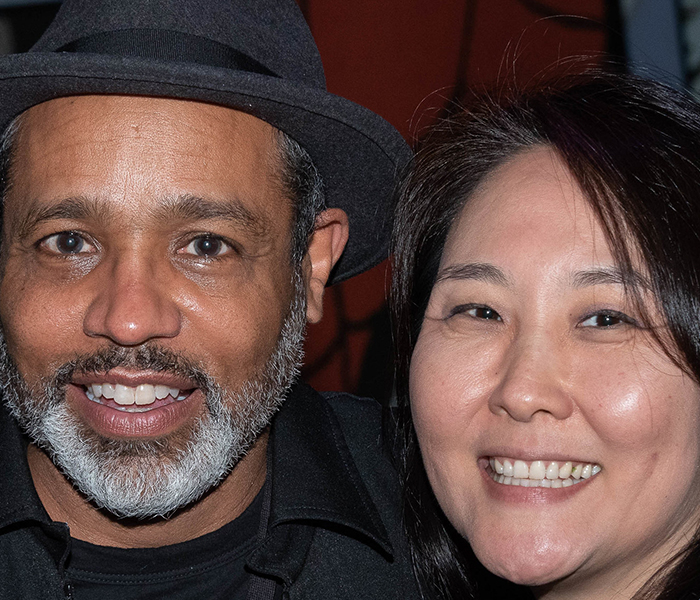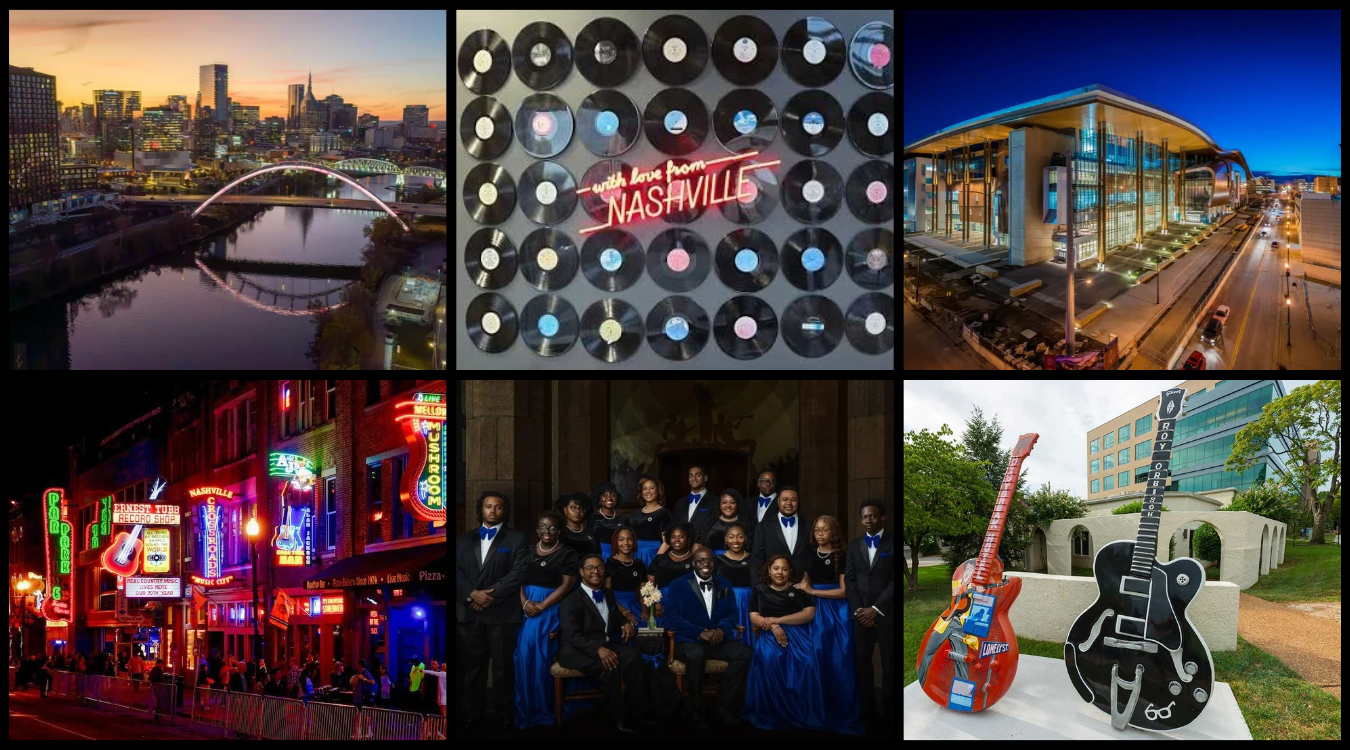

Benefit from peer knowledge and experience as members share ideas and strategies to navigate the changes and opportunities in the arts and higher education.
Unable to log in? Click here to email our administrative office.
Join us for our
Our 62nd Annual Conference
Detroit, Michigan—October 6-8, 2026
With time on the campuses of College of Creative Studies, Cranbook Academy of Arts & Wayne State University
![]()
Who We AreFounded in 1964, the ICfAD membership is a diverse and inclusive organization comprised of deans, associate and assistant deans, directors and chairs, and other fine arts executives in higher education throughout North America and around the world. It is an organization whose members focus on issues and opportunities that impact leadership, administration, and the fine arts and design disciplines. ICfAD’s mission of members helping members throughout their careers is supported by providing annual conferences and international symposia where members can meet with colleagues to expand their networks and learn from one another. Click here to join or renew your membership now. |
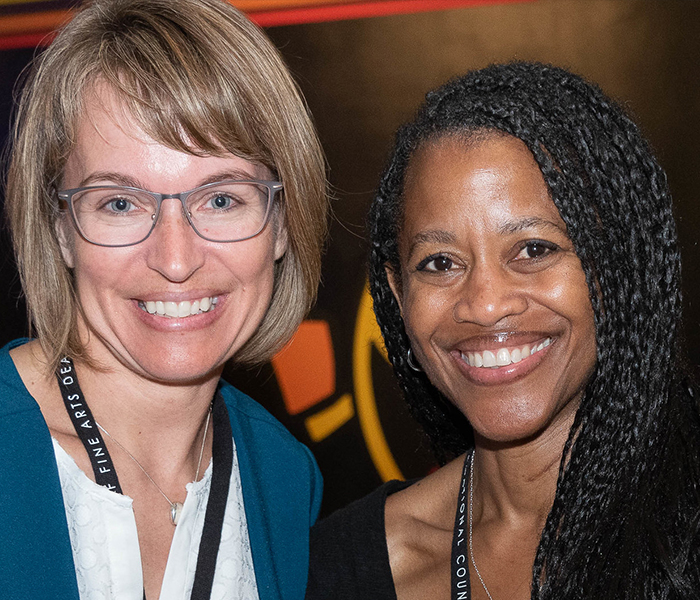
Deans and executive fine arts administrators with a shared commitment to leadership and advocacy excellence in arts higher education
ICfAD: for the creative leader in you
From Stories to Strategy: Lessons from Seven Years of Arts Impact Reporting
February 19, 2026 at 1 Eastern / Noon Central / 11am Mountain / 10am Pacific
Over seven years, Arizona Arts’ State of the Arts | Impact Report has evolved from a “well-designed memo” into a strategic storytelling tool—earning a Southern Arizona PRSA Award of Excellence—that communicates the breadth, relevance, and impact of the arts. This session explores how the report was developed, how themes emerge organically from artistic work, and how narrative can align with institutional priorities such as student success, faculty work, and community engagement. The presentation also reflects on ongoing efforts to provide clearer context for research in the arts through collaboration and story-driven approaches. Charlie Snyder, Director of PR, Marketing & Communications, Arizona Arts / College of Fine Arts, University of Arizona will share.
As always, members are encouraged to share their experiences and best practices, too. Members are also invited to share topics they would like to discuss at future meetings. Register here.
This program is free for members of the Communications Professionals affinity group. Join this affinity group now. Non-members are invited to participate in the discussion with a registration fee of $80.
Tuesday, March 24, 2026 at 4:30pm Eastern / 3:30pm Central / 2:30pm Mountain / 1:30pm Pacific in the United States
Wednesday, March 25, 2026 at 8am Australian Central Daylight Time
As one follow-up to the January 15 discussion about creative practice as research: a presentation offering transferable techniques for making institutional infrastructures visible as designed objects rather than given conditions.
What if the budget spreadsheet is a drawing? The tenure policy a score? The committee meeting a durational performance no one applied to stage?
This presentation treats administrative systems (budgets, policies, scheduling grids, assessment protocols) as cultural forms that encode inherited theories about how knowledge gets made, who collaborates with whom, and what counts as authorship. Rather than accepting these structures as neutral background or inevitable constraint, Bureaucratic Realism proposes that they are material: legible, visualizable, and available for rework through creative methods.
Drawing on his parallel practice as academic administrator and artist, Troy Richards, Dean, School of Art and Design, Fashion Institute of Technology will present visual works derived from actual institutional documents — org charts rendered as kinship diagrams; approval workflows mapped as circulation patterns; a catalogue raisonné of redacted work emails presented in book form. These are not illustrations of bureaucracy but investigations into its aesthetic assumptions.
The session will offer attendees a transferable method: techniques for making their own institutional infrastructures visible as designed objects rather than given conditions. For faculty, this opens questions about how administrative forms shape research and pedagogy. For academic leaders, it reframes operational work as a site of creative agency rather than its opposite. Bureaucratic Realism does not promise escape from institutional constraint. It asks what becomes possible when we stop treating the meeting agenda as dead time and start treating it as composition.
Members will be encouraged to participate in the discussion. Registration for this discussion is free for members and colleagues within their arts academic units. Register here.
Communications Professionals Online Discussions
All discussions will be hosted online the third Thursdays of January, February, March, and April.
Dates: January 15, February 19, March 19, April 16
Time: 1:00 Eastern / 12:00 Central / 11:00 Mountain / 10:00 Pacific. Online programs are 60 minutes.
Discussions may include topics such as Marketing the Arts in a Changing Technological Environment, The Increasing Importance of Authentic Branding, How Generative AI is Shaping Marketing Communications, User Generated Content to Build Trust and Engagement, Short Form Video Content, Data-Driven Marketing Strategies in Higher Ed and other topics to be determined with member input. Invitations for each meeting will be sent. Registration is free for members of each affinity group or $80 per session for non-members. Join this affinity group now.
The International Council for Arts Deans (ICfAD), a global alliance of deans, directors, chairs, and other arts executives, provides leadership opportunities for its members and advocates for the essential role of the arts in higher education. Since its founding in 1964, ICfAD has remained dedicated to mentoring emerging leaders and expanding its international community of arts administrators.
The ICfAD Board of Directors, guided by this mission, affirms that the arts and creative industries have a responsibility to cultivate learning and creative environments that welcome the full breadth of human experience. Through practice, performance, exhibition, and scholarship, we strive to model a professional culture where access, respect, and belonging are fundamental and where every individual is empowered to contribute authentically and meaningfully.
We believe that arts education should reflect a spectrum of perspectives and experiences, fostering open exchange and shared growth among students, faculty, staff, and leaders across our institutions. As a community, we commit to advancing environments that honor differences, nurture dialogue, promote civil discourse and strengthen our collective capacity to imagine and realize a more connected, equitable, and humane world.
ICfAD acknowledges the histories, cultural contexts, and institutional structures that shape our present. We recognize that arts executives hold both the privilege and the responsibility to lead positive transformation in education and society through the arts. Therefore, ICfAD pledges to celebrate the range of creative and scholarly contributions our members bring to the global arts landscape, to facilitate learning and action that promote inclusive and responsible leadership, to support programs and resources that help our members engage thoughtfully with contemporary challenges, and to continue evolving as an organization that reflects and champions the communities we serve today and into the future.
© 2024 International Council for Arts Deans. All Rights Reserved.
561-514-0810 | [email protected]